The Dacia Tender Was a Masterclass
 July 18, 2026
Sometime in 1966 a wooden crate arrived in Bucharest under guard. It had been built deliberately oversized and featureless, so that nobody handling it could work out what was inside. What was inside was a car: a Renault prototype that, as far as the world was concerned, did not yet exist, a model still years away from a French showroom. A handful of people were allowed to look at it for a few days, and then it was crated up and taken away again.
Romania was about to stake its entire future car industry on that hidden prototype. Not on a car you could buy, or drive, or even photograph. And it was the right decision. Nearly forty years later you could still buy a direct descendant of that car, and today the company that grew out of the whole affair builds the best-selling car in Europe.
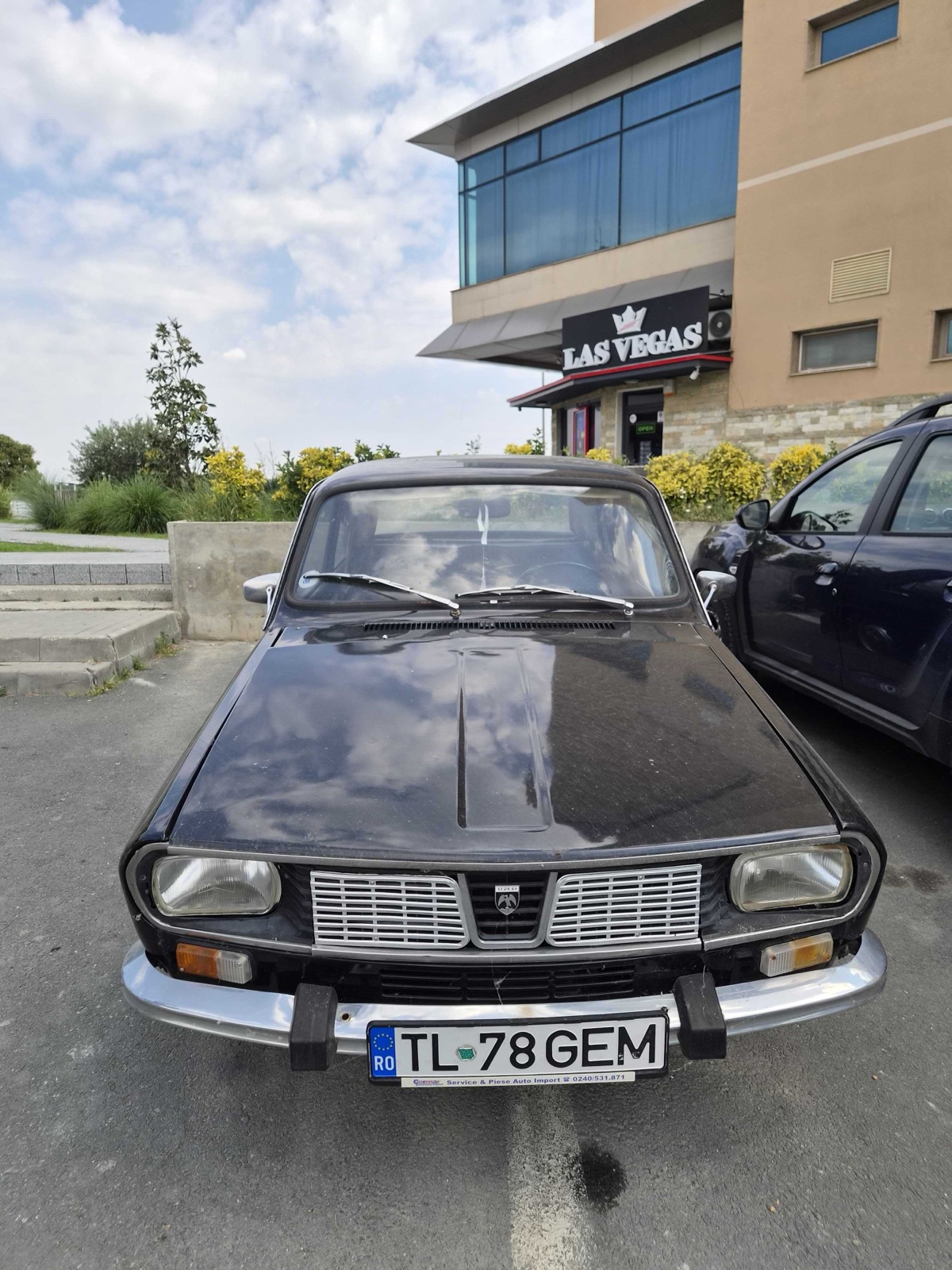
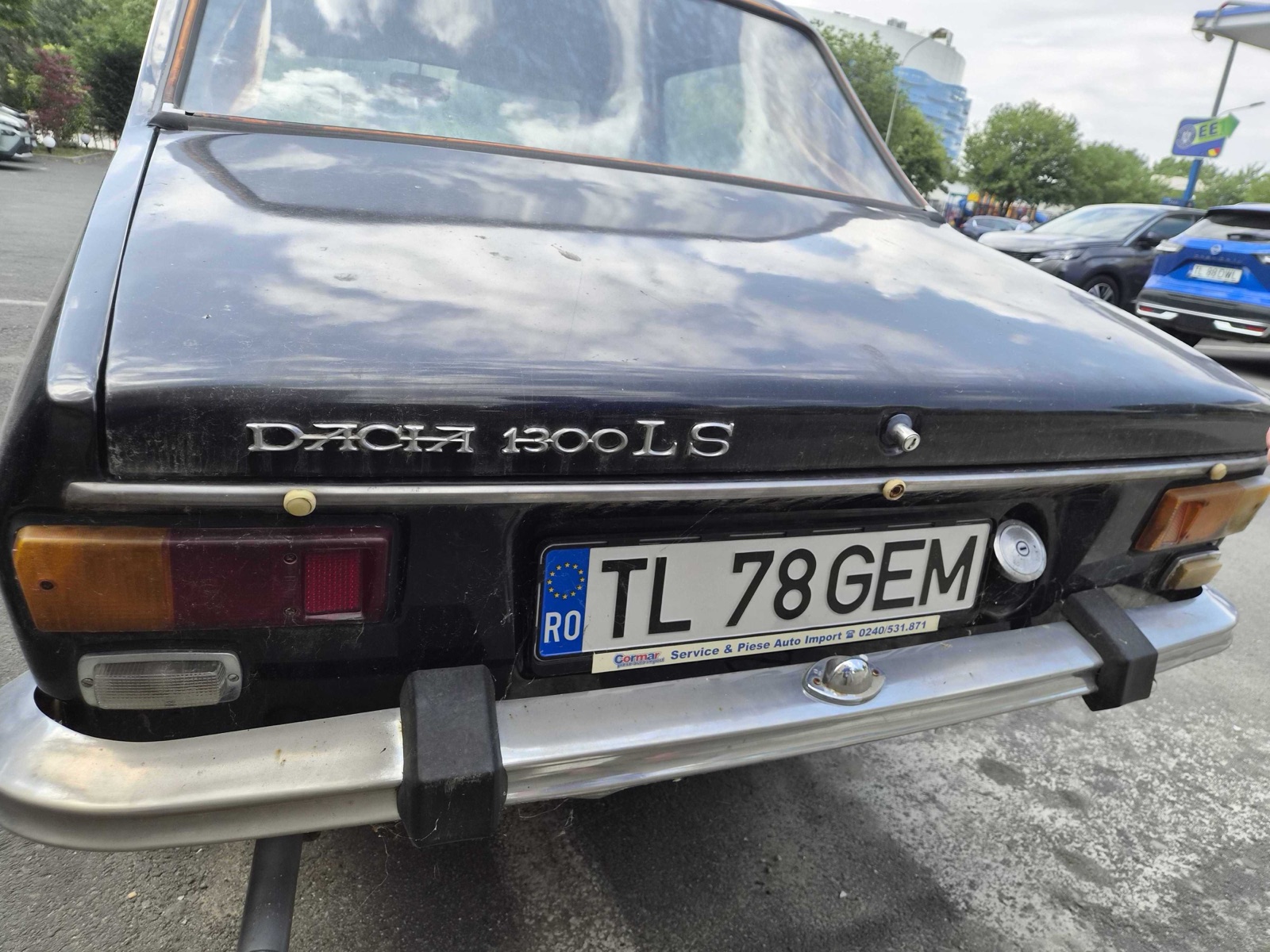
This is a story about procurement. It is usually told as a story about a clever engineering choice, and it was one. But the more you look at it, the clearer it becomes that the engineering was only the first of three good decisions stacked on top of each other. They also wrote an unusually smart contract, and they built a genuine long-term partnership rather than a simple licence. The smartest industrial purchase a country made in the 1960s looked, on paper, like one of the most foolish. They picked the car that wasn’t finished, agreed to build an older one first as a warm-up, turned down the more advanced options, and ignored almost everything a spec sheet is designed to measure. Here is why that worked, what it quietly avoided, how everyone else who attempted the same trick got on, who actually made the final call, why the company on the other side of the table came out ahead too, and where else Renault ran exactly this play.
A note before the argument. The internal deliberations here come from the historian Petre Opriș, working in the Romanian archives. But the public spine of the story, the contract itself, the launches, the rival ventures, is all in the newspapers of the day, and I have gone back to them through the Arcanum press archive. Where a claim is backed by a paper you could have read at the time, I link to it.
Why the procurement happened#
By the mid-1960s Romania had decided it wanted a car industry, and it had almost nothing to build one with. There was no tradition of mass-producing passenger cars and no supplier base making the thousands of parts a car needs to the tolerances a car needs. The one scrap of prior experience, the ARO off-roaders built at Câmpulung Muscel since 1957 on a Soviet GAZ pattern, was low-volume utility work, a world away from a mass-market family car, and I will come back to it, because its fate says something. The decision, taken in 1965, was to acquire the capability rather than invent it: to buy a manufacturing licence for a proven Western design and learn the trade by making somebody else’s car.
That “buy, don’t build” instinct was the first correct call, and it is worth dwelling on because it is not obvious. Designing a car from a standing start is a decade-long exercise in learning by expensive failure, repeating in public and at scale every mistake other manufacturers had already made. A licence skips all of that. You are not really buying a car; you are buying the finished homework: the drawings, the tooling, the process sheets, the tolerances, and a working reference for what “correct” looks like. For a buyer with no experience, that is faster and cheaper than reinventing the automobile, and it comes with a teacher attached.
The brief the buyer wrote was strikingly modest, and the modesty is the second sign of good judgment. What they wanted was a mid-size family car, engine somewhere between 1.0 and 1.3 litres, to be built at 40,000 to 50,000 units a year. Notice what is not in that brief. Not the best car, not the fastest or the most advanced. A buildable, saleable, ordinary car, at volume. The goal was a working industry, and a working industry is made of ordinary cars produced consistently, not of remarkable cars produced badly.
The motives were the ordinary motives of any country trying to industrialise: put its population on wheels, stop spending scarce foreign currency importing finished cars, and grow a web of component suppliers, with the jobs and engineering skills that spill from them into the rest of the economy. A car plant is a statement as much as a factory. But underneath the ambition sat a clear-eyed assessment: we do not know how to do this yet, so let us buy the knowledge and stage the learning. Everything that followed flows from that honesty about where they were starting.
The best choice, even in hindsight, and what it avoided#
Several manufacturers arrived with real cars. Retrospective Romanian accounts, drawing on the same archival record, list the field as Renault (the Renault 10, with the still-unfinished Renault 12 behind it), Peugeot (the 204), Fiat (the 1100D), Alfa Romeo (the Giulia 1300) and Austin (the Mini/Morris), with the note that “only Renault’s offer, for the Renault 12, was retained” (Jurnalul Național, 13 April 2004). A Hungarian motoring magazine, reporting the outcome in early 1967, named the firms Romania negotiated with as Renault, Fiat, Ford’s West German arm and Britain’s BMC (the Mini’s parent), and put the result bluntly: “Renault emerged victorious from the competition” (Autó-Motor, January 1967). So Ford was a genuine bidder, even if the further claim that it offered a ten-year plan to build the entire industry, rather than a single model, still does not turn up in the period press. The bidder list itself is not perfectly stable across sources: a Pitești daily, writing in 1970, remembered the contenders as “Fiat, Alfa Romeo, Volkswagen, Triumph, Peugeot, Renault,” and recorded flatly that “the licence of the Régie Nationale Renault was chosen as the most advantageous” (Secera și Ciocanul, 20 August 1970). A weaker account also swaps in a West German two-stroke, the DKW F102; the better-sourced record leaves it out. The details wobble, but the shape holds: a spread of Western family cars was on the table, and Renault won.
Here is the uncomfortable truth that makes the decision interesting: on pure product merit, several of the losing bids were better cars. The Alfa Romeo Giulia 1300 had an alloy twin-cam engine that was, straightforwardly, the finest piece of engineering in the room. The Peugeot 204 was the most modern, with front-wheel drive and an overhead-cam alloy engine, genuinely advanced for its class. The Mini was the cleverest packaging exercise the industry had produced in a generation. If you were scoring the bids the way an enthusiast scores cars, Romania picked wrong.
But the buyer was not scoring cars. It was scoring capability transfer, which is a completely different sheet. The questions that actually decided the future were these. Can an inexperienced workforce build this to a consistent standard, on its very first attempt at building anything? Can it be maintained and repaired out in the country, with no established dealer or parts network? Will it survive poor fuel and worse roads without constant attention? And how many years will this one enormous investment in tooling and training keep paying back?
Score the field on those questions and the picture inverts. The Alfa’s twin-cam brilliance became a liability: it demanded skilled assembly and disciplined maintenance that did not yet exist and could not be conjured. The Mini’s cleverness became a liability too. It was notoriously difficult to build to any consistent standard, and it came from a manufacturer whose own quality reputation was already shaky and whose corporate future was, though nobody in the room knew it yet, catastrophic. The Fiat 1100D was simple and honest but built on a platform already heading for retirement, so buying it meant buying a design that would be obsolete almost immediately. And a two-stroke, had one truly been offered, was a technological dead end no matter how well it was assembled.
The Renault 12, by contrast, was almost aggressively unremarkable, and that was precisely its virtue. Simple front-wheel-drive layout. A robust pushrod engine, the Cléon-Fonte unit, that was tolerant of bad fuel, cheap to make, easy to fix, and very nearly impossible to kill. It was, in the most literal sense, a car you could learn on and keep running. It scored magnificently on the sheet that mattered and unremarkably on the sheet that didn’t.
Which brings us back to the crate. The Renault 12 was chosen while it was still a prototype: designed in 1965, known internally as “Projet 117,” not due for series production in France until the second half of 1969. That is why it was flown in under guard and shown in secret. The buyer was inspecting a car the public would not see for years.
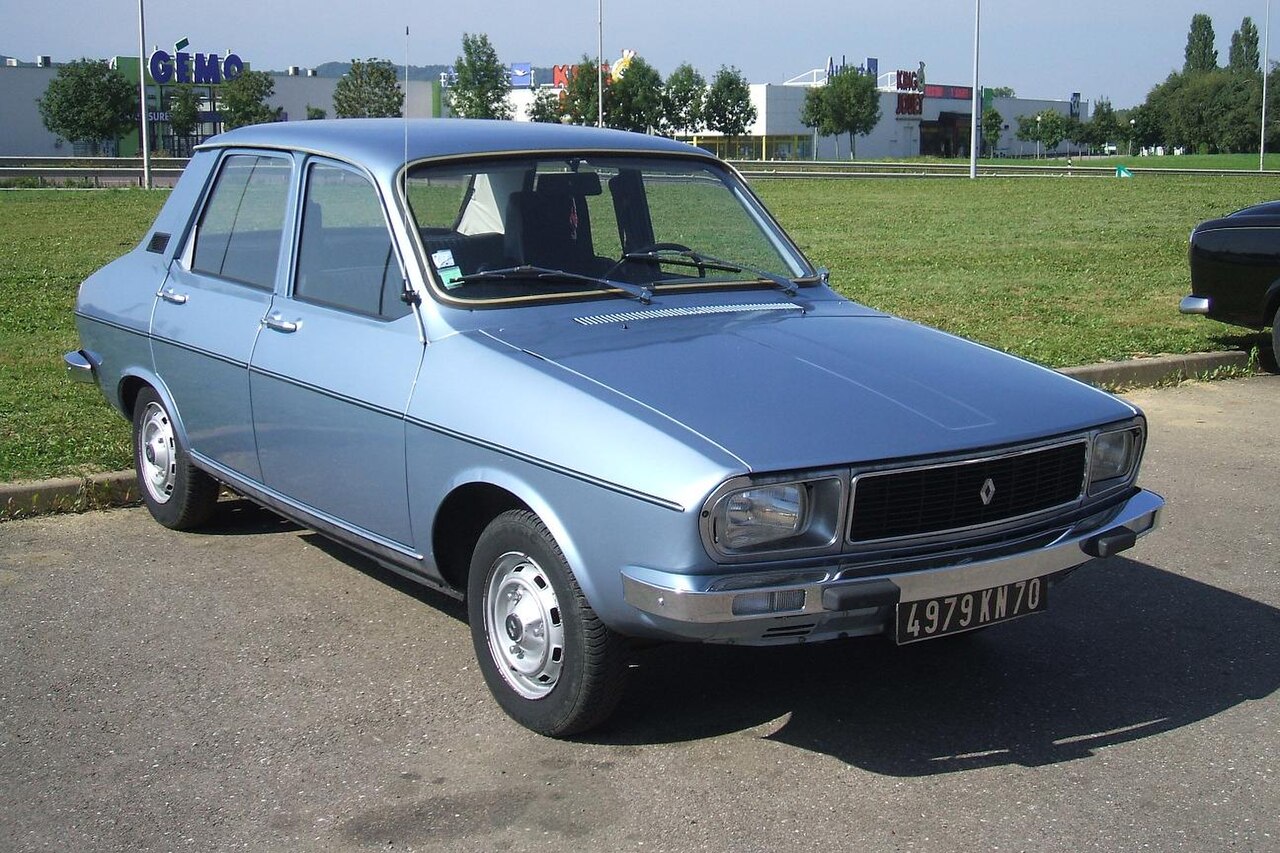

Because the target car was not ready, the deal built in a warm-up, and this is where the contemporary record corrects the usual telling. The framework contract signed in the autumn of 1966 did not name the little Renault 8 as the starter. The public announcement of the deal is explicit: “production will begin with the Renault 16 type, with the gradual assimilation of further models to follow,” and “the plant will enter production at the beginning of 1969, with an annual capacity of 50,000 vehicles” (Crișana, 13 September 1966). The Renault 16 was the upmarket choice, Europe’s Car of the Year for 1966. Only afterwards, on cost, did Romania climb down to the cheaper, simpler Renault 8, which entered local production as the Dacia 1100 in 1968. So the interim car was not rejected during the bidding; it was written into the signed contract as the more ambitious R16 and then quietly swapped for the humbler R8 before a single car was built. The instinct to start modestly was right, but it arrived as a second thought, not a first one.
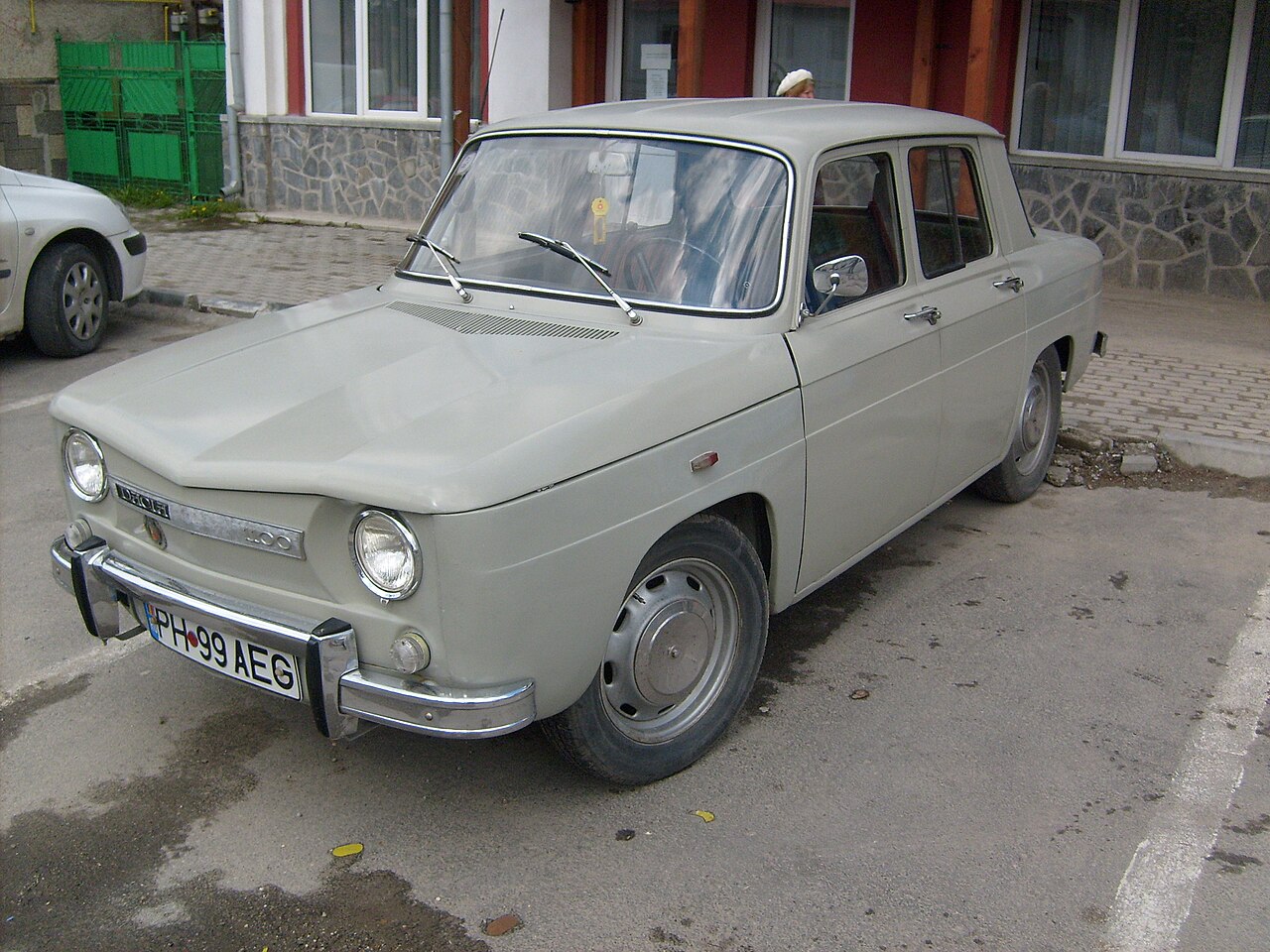

The launch of that warm-up car was a national event. On 20 August 1968 the first Dacia 1100 rolled off the line at the new plant near Pitești, and the ceremony, with the head of state present, was carried on the front pages of local papers the length of the country the next morning (Făclia, 21 August 1968; România Liberă, 21 August 1968). About 37,546 of them were made through 1972 (Curierul Național, 9 February 2005). The real target, the Renault 12, arrived as the Dacia 1300 the following year.
Read that sequence as engineering and it is sound: build competence on the more forgiving car first, then step up to the more demanding one. It is exactly how you bring a factory line up on an easy part before you run the hard one. The stopgap that looks like penny-pinching is actually risk management, a deliberate staging of difficulty so the workforce learned to walk before it was asked to run.
And the vindication came in the most convincing form there is: time. The Dacia 1300 and its derivatives stayed in production, evolving, until 2004, roughly thirty-five years. Its fuel consumption, about 8.5 litres per 100 kilometres in period terms, was thoroughly average; its durability and repairability were the whole point. There is a neat paradox buried in the numbers. The two most fuel-efficient bids, the Mini at around 7.0 and the Peugeot at around 7.8 litres per 100 kilometres, were also the two worst on buildability and long-run reliability. The Renault sat mid-table on economy and won on everything the situation actually required. Chosen for the boring virtues, it delivered them for four decades.
Success where others failed#
None of this would be worth writing up if it were a lucky one-off. It is worth writing up because history ran the experiment many times. Across the same period, countries set out to bootstrap a national car industry by licensing a foreign design, and their outcomes line up almost perfectly with the same handful of variables. There is a control group, and it is instructive.
Start with the ones that worked, because they all made the same three choices Romania did: buy something buildable, insist the deal transfer real method and not just crates of parts, and stay plugged into the technological frontier instead of walling themselves off.
Spain is the clean case. SEAT was founded in 1950 on a Fiat licence, scaled steadily into a genuine national producer, and was eventually absorbed into the Volkswagen Group, a licensee that grew all the way up into a global company. The Soviet Union is the case of a licensee improving what it bought: it licensed the then-current Fiat 124 in 1966, built it at a vast new plant at Tolyatti, and ruggedised it into the Lada, one of the most-produced and most-serviceable cars in the history of the automobile. Hungarian trade reporting of the day noted the point that made the Fiat 124 such a prize, that it had just been named Car of the Year for 1966 (Világgazdaság, 9 July 1971). But the sharpest exemplar is South Korea. Hyundai began, humbly, by assembling Ford Cortinas under licence from 1968, used the transferred capability to develop its own car, the Pony, in 1975, and from there climbed to genuine global competitiveness, all while staying tightly integrated with international suppliers and markets. The Korean sequence is the whole lesson compressed into one company: capability first, autonomy second, integration always.
Now the ones that failed, which are just as illuminating because each failed by inverting one of those choices.
Bulgaria never reached scale. It assembled Renault 8s and 10s as “Bulgarrenault,” with the first cars leaving the line in 1966 (Auto-Motor, 21 March 1969), and by later Hungarian accounting the operation managed only 20,000 to 25,000 cars a year before it was shut down around 1970 (Világgazdaság, 4 July 1986). Bulgaria then gave up on Western licensing and fell back on assembling the Soviet Moskvitch. The volumes were never large enough to embed real capability in a workforce or a supply chain; you cannot learn to build cars a few hundred at a time. East Germany made the opposite mistake: it never licensed a modern Western design at all. Its Trabant and Wartburg soldiered on with two-stroke engines, essentially unchanged from the late 1950s into the 1990s, and the industry collapsed the instant it was exposed to open competition. Self-sufficiency with no live connection to the frontier turns out to be stagnation with extra steps. And Yugoslavia is the cautionary tale about quality: Zastava built Fiat-licensed cars for decades and, from 1985, exported the Yugo to the United States, where its reputation for unreliability was so severe that it became international shorthand for a bad car. The reputation went first; the industry followed.
There is a fourth kind of comparison available, and it is the most pointed of all, because it is the same country trying the same thing again a decade later and getting the opposite result. In 1976 Romania entered a second car venture, this time with Citroën, at Craiova: a joint company, the state holding 64% and Citroën 36%, building a modern small car sold at home as the Oltcit and in the West as the Citroën Axel. Hungarian readers could follow the two Romanian cars side by side, the Renault-based Dacia and the Citroën-based Oltcit, in their own press (Népszava, 6 June 1995). Citroën put up a brand-new, purpose-built plant. And it failed. A mandate to reach around 40% local content, pushed too fast, wrecked the quality of the locally-made parts; a factory built for up to 130,000 cars a year rarely made more than 20,000; Citroën spent years as a frustrated partner and eventually walked away around 1990. Some 215,000 cars were built across 1981 to 1993, a fraction of the plant’s capacity. Same country, same “buy a Western licence” playbook, but this time they chased self-sufficiency faster than quality could follow, and it broke.
Which brings me back to ARO, and it may be the sharpest control case of all, because this car was good. The Câmpulung works had built off-roaders since 1957, starting on that Soviet GAZ-69 pattern and later designing its own ARO 24 family, and the result was no embarrassment: ARO sold into more than fifty countries, was marketed as a world brand, and beat Land Rover, Jeep and the rest in comparative trials (Szabad Szó, 16 July 1975). Around 380,000 were built (Bihari Napló, 23 December 2019). The Renault know-how even spilled the forty kilometres down the road, so that the 1980s ARO 10 rode on Dacia running gear (Autó-Motor, 15 February 1990). And yet ARO is dead, its line stopped after 2000 and the plant handed to a ruinous privatization (Cuvântul Liber, 2 November 2021), while Dacia, built on the same national effort, is the best-selling budget brand in Europe. The gap was not engineering, which ARO had in abundance. It was that Dacia ended up with a partner who came back and stayed, and ARO never found one. Capability keeps you alive for a while; a partner keeps you alive for good.
Lay all of it side by side and one pattern falls out with unusual clarity. Licensing works as a nation-building tool when you buy something your people can actually build, when the deal transfers method rather than merely components, when you reach real volume, and when you keep learning from outside. It fails when you buy the wrong thing, or push local content faster than quality can keep up, or never reach scale, or seal yourself off from the frontier you are trying to catch. The first Dacia deal did the first list; nearly every failure did something from the second. Dacia succeeded, in the end, by being the mirror image of the projects that didn’t.
Engineering decision, or did the politicians listen to the engineers?#
Now for the part that makes anyone who has ever run a serious procurement wince in anticipation. The final decision was not made by an engineering committee weighing the bids on a scorecard. It was made at the very top of the government, and it was made suddenly, over the heads of officials who were, at that exact moment, still busy negotiating with rival bidders.
The detail that captures it, documented by Opriș, is that in early September 1966, when the Renault choice was effectively settled, the country’s own foreign minister was in Italy discussing Alfa Romeo’s competing offer, a licensed Giulia 1300 bundled with a bus production line, and assuring his Italian hosts that no final decision had been taken. It had. The ambassador in Rome was caught out too. A rival bidder was being courted in one capital while the deal was being closed with someone else in another.
There had been internal resistance to the project itself, and not on engineering grounds. The head of the State Planning Committee, Gheorghe Gaston-Marin, had argued against the Renault proposal on a sober economic objection: ordinary buyers lacked the purchasing power for such a car, and the Western market already offered plenty of choice. He was overruled. So the decision did not merely cut across officials mid-negotiation; it cut across a senior planner’s considered economic case, which makes what happened next all the more striking.
On its face, this is the setup for every procurement horror story ever told: politics reaches down from above and overrules the technical process, and the result is a boondoggle everyone regrets for a generation. That is the common version of this story. This is not that version, and that is what makes it worth telling.
Because look, again, at what was actually chosen. On every axis a competent engineer would weight for this precise situation, buildability by novices, repairability in the field, tolerance of the operating environment, longevity of the design, the selected bid is the right answer. Not the flashiest, not the most advanced. The one that could be built and kept running by people learning as they went, and the one that would still be rolling off a line in 2004. If a political fiat overruled the engineers here, it happened to overrule them in favour of the exact car the engineers should have wanted.
So one of two things is true, and both of them flatter the engineering. Either the “political” decision was, underneath the diplomacy, an engineering decision wearing a diplomat’s coat: the technical case was so strong that the choice was effectively made on the merits and merely ratified at the top. Or the decision-makers did the single rarest and most valuable thing a leadership can do in a technical procurement: they listened to their engineers, understood the case, and backed it, even while the diplomatic theatre played out around rival suitors.
The diplomacy is worth pinning down, because it is easy to overstate. The relationship between France and Romania was warming through these years, but the marquee event, Charles de Gaulle’s state visit to Bucharest, the first ever by a French head of state to Romania, did not come until 14 to 18 May 1968 (Scînteia, 19 May 1968; Cuvântul Libertății, 17 May 2008). That is nearly two years after the Renault contract was signed. So the grandest gesture of Franco-Romanian friendship followed the deal; it did not cause it. If anything, the car contract helped warm the relationship that the visit later crowned. The diplomacy might explain why Renault got a friendly hearing, but it does not explain why Renault was the correct choice, and correct it was. Whichever reading you prefer, the outcome is the same: the spec sheet lost, and the right sheet won.
One question everyone asks about a contest is whether the losers protested. On the record, they did not. I can find no contemporary report of Fiat, Peugeot, Alfa Romeo or the British makers publicly complaining about the outcome, and the reason is probably that none of them went home empty-handed. The mid-1960s were a gold rush for Western carmakers looking east, and the also-rans were busy winning elsewhere. Fiat landed the two biggest prizes of the decade, the vast Lada plant at Tolyatti and the Polski Fiat works near Warsaw, both settled in 1966. Peugeot, the other French loser, was invited within weeks, alongside Renault, to modernise the Soviet Moskvich plant (Autó-Motor, 21 April 1968), and at home the two French firms spent the rest of the decade deepening their own partnership (Világgazdaság, 26 November 1970). Britain’s makers were courting Moscow too. The only wounded reaction I can trace is diplomatic rather than commercial, and it comes from the archive rather than the papers: because Romania’s foreign minister was still assuring his Italian hosts that Alfa Romeo’s bid was alive at the very moment the Renault deal was being closed, Italy and Alfa were blindsided. Sour grapes, if there were any, stayed private.
The contract, and a real partnership#
If the engineering choice was the first good decision, the contract was the second, and it is the one most often overlooked. The framework agreement was signed in Bucharest in early September 1966, between the Romanian foreign-trade enterprise “Industrialimport” and the Régie Nationale des Usines Renault, as a licence for the manufacture and sale of cars, vans and derived vehicles, with an initial ten-year term (Crișana, 13 September 1966). Read it for the risk engineering rather than the ceremony and two things stand out, both of which any procurement professional should recognise as unusually mature.
The first is that the single largest execution risk was written into the deal instead of left to chance. The car they actually wanted, the Renault 12, did not yet exist as a production model and would not for another three years. A naive contract either gambles on that date or waits idle for it. This one did neither: it provided for building an interim car of the same class until the real target was ready. As we have seen, the contract even named that interim model, the Renault 16, before Romania traded down to the cheaper Renault 8. The gap between “factory finished in 1968” and “chosen car ready in 1969,” the exact kind of timing mismatch that sinks big industrial programmes, was not a problem to be argued about later. It was a clause.
The second is subtler and, to my mind, the cleverest part of the whole thing: they were contracting for longevity, not just for a car. Earlier in the process, when the Renault 10 was on the table, the Romanian side insisted that Renault keep the licensed model in production within its own range for ten years, and rejected the R10 precisely because it was near the end of its life and about to be replaced. Think about what that clause is really buying. It is not buying a vehicle; it is buying the guarantee that the design you are about to tool a factory and train a workforce around will still be a live, supported product a decade later. It is insurance against being orphaned. A buyer who insists on that has understood that the expensive part of this decision is not the car; it is everything that gets built around the car, and all of it is wasted if the design is discontinued out from under you.
And here is the detail that ties the contracting back to the engineering. There is no evidence that any of this rested on a delivery penalty hanging over Renault for the Renault 12. The risk was handled structurally, through the interim-model provision and the continuity requirement, rather than through the threat of damages. That is what a well-constructed deal looks like: the incentives are arranged so that the outcome you want happens naturally, and the penalty clause, if it exists at all, never needs to be reached for. The full contract text is not public, so I cannot rule out a penalty clause, but the mechanism the record actually describes is structural, not punitive. Engineering chose the right car. Contracting made sure it would arrive, and keep arriving.
The third good decision was to treat the thing as a partnership rather than a transaction, and the clearest proof of that is the timing of the launch.
Normal licensing runs a generation behind. The licensee gets a superseded, end-of-life design and builds it years after the home market has moved on, the way SEAT assembled old Fiats, or the Fiat 1100 lived on in India as the Premier Padmini for decades. The licensee is where old tooling goes to retire. What happened here was the opposite. The Dacia 1300, the Renault 12, entered series production in Romania in the second half of 1969 and was on show at the Bucharest autumn fair by early October (România Liberă, 1 October 1969; Sportul, 5 October 1969), essentially in parallel with the Renault 12’s own public unveiling at the Paris Motor Show that same month. Romanian and Hungarian sources of the period treat the two cars as twins launched together: “sister twins, the Renault 12 and the Dacia 1300” (Almanah Magazin, 1971), the R12 “launched at the same time” in France (Cuvântul Liber, 9 May 2014). The exact Romanian start date is remembered variously, 20 or 23 August 1969 in the Romanian papers, 25 September in a Hungarian road-test magazine (Technika, 1972), but the striking fact survives every version: Romania was building the current car at essentially the moment the world first saw it in Paris. The licensee was not a generation behind the home market; for a moment it was level with it.
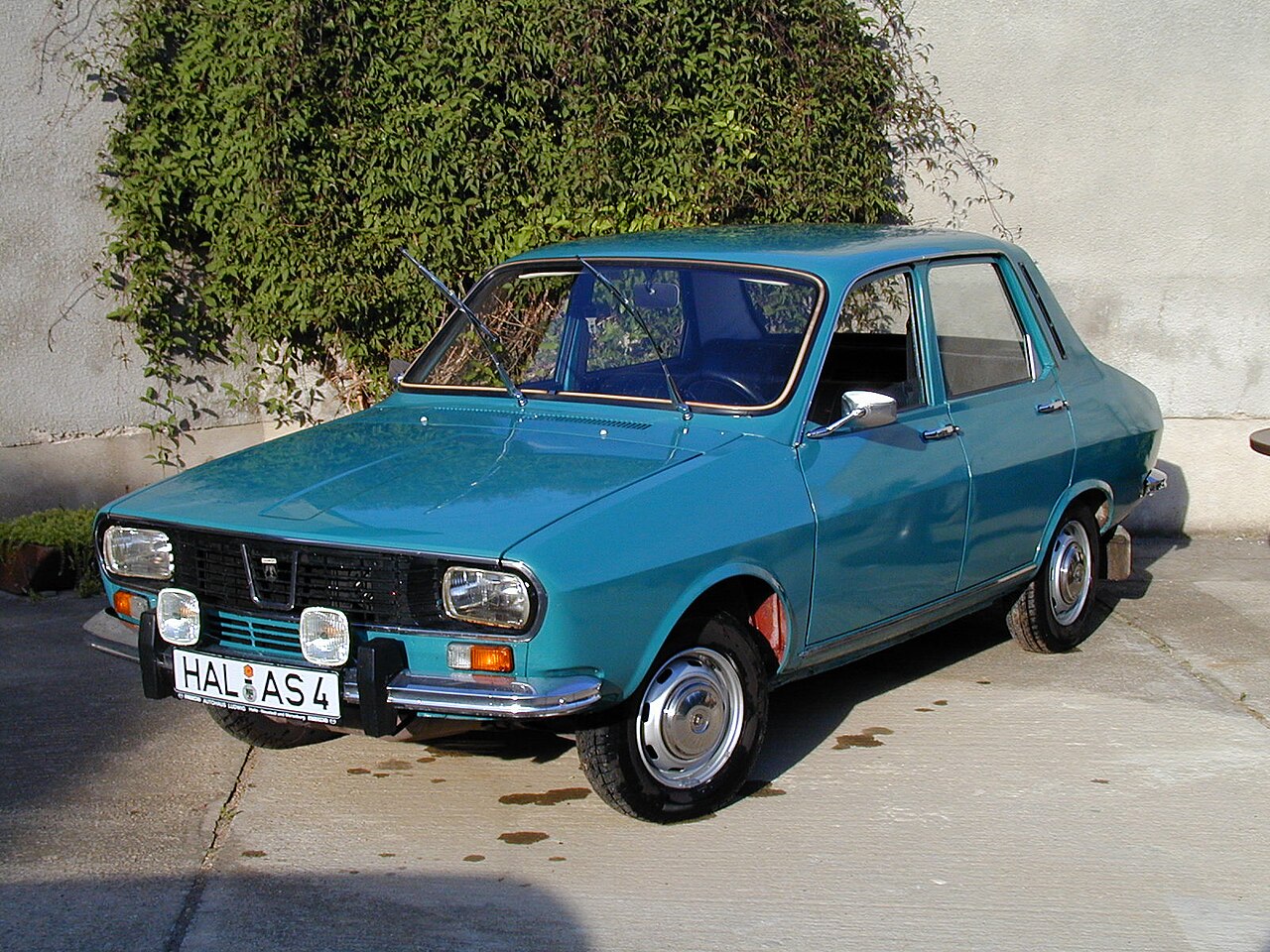

That is not how you treat a dumping ground. It is how you treat a genuine second production base for a current model. It put Romania at the technological frontier from day one, the opposite of the failure cases that licensed the trailing edge, and that frontier positioning is a large part of why the platform went on to live thirty-five years. By refusing an end-of-life model and holding out for the newest car, the buyer reset the design clock to zero and gave itself the longest possible runway. There was a cost to the boldness: building a brand-new, unproven design with a green workforce meant inheriting the R12’s teething troubles rather than a debugged car, which shows up in the early Dacia 1300’s quality complaints. But the interim Renault 8 year had done its job of getting the workforce off zero first. The staging and the simultaneity worked together: learn on the old car, then launch the new one at full currency.
Renault’s world car, and where else it ran the same play#
Romania was not a one-off. It was the leading edge of a deliberate strategy, and understanding that strategy is what turns this from a nice historical anecdote into a repeatable model.
The Renault 12 had been engineered from the outset to be built anywhere. Internally it was Projet 117, and the design brief was explicit about it: the car was to be economical and deliberately unsophisticated, roomy, cheap, easy to manufacture so that it could be produced all over the world, reliable enough for tough export markets, and usable as the basis for many variants. That is not a description of a French family car that happened to get exported. It is a description of a world car, designed as one, among the first genuine world cars after the Volkswagen Beetle. Around 2.5 million were eventually built.
And built they were, almost everywhere: in France, but also in Spain (by FASA-Renault at Valladolid), Turkey (by Oyak-Renault at Bursa, badged the Renault 12 Toros), Argentina (at Santa Isabel), Colombia (by SOFASA at Envigado), Yugoslavia (by IMV at Novo Mesto), and in Australia, Brazil, Mexico and Morocco besides. What is striking, once you place Romania inside that map, is that Romania was the vanguard. Its 1969 production start ran essentially level with France and ahead of the Paris reveal, earlier than Spain and Argentina, which came on stream around 1970, and Turkey in 1971. Of all the places Renault chose to build its new world car, Romania went first. That is not a mark of a marginal licensee; it is a mark of trust in a partner.
Now the part that matters most for the partnership thesis: watch how those other ventures turned out, because the pattern that produced Dacia recurs. Several of Renault’s licence-and-assembly partners for the R12 did exactly what Dacia eventually did, maturing over decades from a licence into a permanent, wholly-integrated Renault production base. FASA-Renault in Spain became a Renault subsidiary, and Valladolid remains one of the company’s core European plants to this day. Oyak-Renault’s factory at Bursa, a joint venture with a Turkish pension fund, built the R12 Toros right up to 2000 and grew into one of Renault’s largest and most successful plants anywhere, a major export hub. The Yugoslav operation at Novo Mesto became Revoz, now Renault’s plant in Slovenia, building the Clio and the Twingo. Argentina and Colombia ran the R12 for decades as durable, long-lived operations.
So the shape of the Dacia deal was not unique to Romania. Get a current world-car model rather than a hand-me-down; transfer real capability, not just parts; treat the host as a genuine production base; and let the relationship deepen over decades, in several cases all the way into outright ownership. That is a repeatable play, and where Renault ran it properly it worked and endured. Dacia is simply the most spectacular instance of it, the one where the partner, decades later, produced the group’s best-selling car. Renault would market the Renault 18 as its “first true world car,” with the slogan “Meeting International Requirements,” but the R12 was the vehicle that actually proved the model, and Romania was where it proved it first.
Why it helped Renault too#
Good procurements are not zero-sum, and the best ones pay both sides back over a horizon most people never think to measure. This one paid the seller back for forty years, though not at first, and not in the obvious way.
Consider Renault’s situation in 1966. It was not a normal company. It was a state-owned enterprise, the Régie Nationale des Usines Renault, nationalised in 1945, and under its long-serving chief executive Pierre Dreyfus (in the job from 1955 to 1975) it had become a showpiece of French industry, growing from around 175,000 cars a year to 1.3 million and turning into France’s single largest industrial exporter. It was also a pioneer of front-wheel drive, with the R4 and the R16 (the latter named European Car of the Year in 1966). By any external measure it was thriving.
But it had a peculiar, structural weakness, and the Romania deal makes no sense without it. As a state company held to a level playing field, Renault received no state subsidy, was not permitted capital increases, and held no real reserves, which meant it could not easily fund the kind of large greenfield foreign plants its ambitions called for out of its own pocket. Partnerships therefore became something close to an obsession for Dreyfus, who met practically every manufacturer in Europe looking for them. Licensing and assembly deals were the answer: a way to expand the company’s footprint on very little capital, because the host country built and paid for the plant. Renault’s foreign sites grew from five in 1955 to twenty by 1965 and twenty-five by 1973 on exactly this model, and the Renault 12 world-car programme was the vehicle, literally, that carried much of that expansion. Hungarian trade reporting confirms the breadth of the play in the region, noting that Romania took the French licence in 1966, building first the Renault 8 and then the Renault 12, while Bulgaria also assembled Renault models (Külgazdaság, 1980).
There was even a clever wrinkle for customers with no hard currency to pay with: Renault accepted payment in kind, taking goods instead of cash, and set up a dedicated trading arm, Sorimex, in 1966 to sell on whatever it received. The mechanism was concrete on the Romanian side. Dacia manufactured gearboxes and axles for Renault’s Estafette van to earn the foreign currency it needed to buy industrial equipment, so the licence partly paid for itself in components rather than cash; the Estafette itself went into Romanian production from 1973 (Világgazdaság, 1 June 1972). For a capital-starved state champion, a licensing deal with a foreign government was close to the perfect growth vehicle: someone else’s money, someone else’s factory, extending the life and volume of your own model. And Romania mattered more than most. Of all Renault’s ventures in the region it was the most important, the company’s real foothold there, and in effect its answer to the bigger prize Fiat had landed the same year with the Soviet Union.
For a long stretch the relationship was commercially awkward, strained by the payment-in-kind arrangements and the later drive for local content. The ten-year licence lapsed in 1976. Talks resumed and reached a June 1978 draft framework to build the Renault 18 in Romania, complete with a mooted joint auto-electronics plant, but it was never signed (Világgazdaság, 16 August 1978), and the partnership wound down. Dacia carried on alone, developing the Renault 12 platform independently, and it is here that quality slowly decayed, through what Opriș calls dérogation. To keep the lines moving against chronic parts shortages, engineers institutionalised carrying on regardless, substituting lower-grade parts, so that “good enough” quietly slid downwards for years. If the story had ended there, it would be a footnote. It did not end there.
Decades later the relationship inverted completely. Renault came back and bought Dacia outright, taking a majority stake in 1999. What it acquired was the thing the 1966 deal had spent thirty years building: a low-cost manufacturing base with a skilled workforce, an existing plant, and a trusted domestic brand, now inside the orbit of the European market. Turning it around was a wrenching modernization, with the workforce falling from roughly 28,000 to 16,000 in four years, a human cost documented at length by Daniel Debrosse, a project director on the 1998 start-up team, in a later doctoral history. Renault put that base to work with a deceptively simple idea, championed by then-CEO Louis Schweitzer. The Logan, launched in 2004 at around 5,000 euros, was built on proven, already-paid-for Renault platforms, with limited trim complexity, minimal cosmetic variation, and durable, unfashionable hardware. It redefined what a cheap new car could be. Dacia became one of Renault’s most profitable brands, the budget marque quietly subsidising the group. The Dacia Sandero was the best-selling car in Europe, across all channels, in both 2024 and 2025, roughly 289,000 of them worldwide last year, and the Duster added nearly 194,000 more. The ordinary little licensed car line became the crown jewel.
That is the full shape of it. A deal that began as a modest licence for a not-yet-finished car, built by people who had never built a car, ended as one of the most profitable brands owned by the company that sold the licence in the first place. Both sides won, on a timescale of forty years.
The lesson worth keeping#
Strip away the dates and the flags and it reduces to three principles, stacked, and they apply to anyone buying the thing a whole future will depend on, in any industry.
The first is about the product: foundational procurement is capability procurement. When you make that kind of purchase, the merits of the product in front of you are the least interesting variable. What matters is whether your people can build it, maintain it, learn from it, and keep it in service long enough for the enormous underlying investment to compound. Buy for the boring years, not for the demo. The dazzling options are usually traps.
The second is about the deal: contract for the risks that actually threaten you, and buy certainty, not just goods. The Romanian contract anticipated the one thing most likely to go wrong, the car being late, and built the fix into the agreement rather than leaving it to a dispute. And it bought longevity as an explicit term, insuring against the design being discontinued out from under a factory that depended on it. The best contracts arrange incentives so that the outcome you want happens on its own and the penalty clause never has to be used.
The third is about the relationship: pick a partner who will treat you as a real production base and stay for the long haul. The tell that this was a partnership and not a hand-me-down was the timing: the current model, launched in Romania in step with its debut in Paris, rather than a superseded one dumped a decade late. That single fact put the whole enterprise at the technological frontier, and the frontier is where durable industries are built. Renault ran the same play with Spain, Turkey and Slovenia, and in each case a licence deepened over decades into a permanent plant. Romania was where it started, and where it paid off most.
The buyers in 1966 understood all three at once. They chose a car you could build and keep running over one that was merely better; they wrote a deal that guaranteed it would arrive and endure; and they secured a partner that treated them as the front line of a world-car programme rather than the back of the queue. Everyone who out-specced them lost. Everyone who out-negotiated themselves, chasing self-sufficiency, or scale they could not reach, or a partner who would not stay, lost too. And the most important thing the decision-makers did, in the end, might have been the simplest thing anyone in charge of a technical decision can do: they looked at what the engineering was telling them, and they believed it. They bought a car nobody could see, and it turned out to be the clearest-eyed purchase in the room.
Appendix: the facts and the sources#
The tender and the timeline#
- 1965: Romania decides to establish a domestic car industry via a manufacturing licence rather than in-house design, citing lack of experience and the wish to shorten time-to-production.
- Brief: a mid-class car, 1,000 to 1,300 cc, at 40,000 to 50,000 units per year. The 50,000-vehicle annual capacity is stated in the original 1966 contract announcement (see below).
- August 1966: the licensing options are weighed at two top-level government sessions (16 and 22 August), per Opriș.
- Early September 1966: the choice of Renault is effectively settled at the highest level. Per Opriș, at this time the foreign minister, Corneliu Mănescu, is in Italy discussing Alfa Romeo’s rival offer (a licensed Giulia 1300 plus a bus production line), having told his hosts no decision has been made; the ambassador in Rome, Cornel Burtică, is also caught unaware.
- 6 September 1966: a ten-year framework licence is signed in Bucharest between the Romanian foreign-trade enterprise “Industrialimport” and the Régie Nationale des Usines Renault (RNUR). The signing was announced in the press the following week (Crișana, 13 September 1966).
- Plant site: fixed at Colibași (later Mioveni), near Pitești, on a site with earlier industrial history. Construction ran from 1967 to 1968.
- Internal opposition (Opriș): Gheorghe Gaston-Marin, head of the State Planning Committee, opposed the Renault project on economic grounds, insufficient domestic purchasing power and ample Western choice, and was overruled.
The contract terms (as documented)#
- Framework licence, 10-year initial term, Industrialimport and RNUR, for the manufacture and sale of “autoturisme, autoutilitare și alte mașini derivate” (Crișana, 13 September 1966).
- Starter model as signed: the 1966 announcement states plainly that “production will begin with the Renault 16 type” (“Producția va începe cu tipul Renault 16”), with gradual local assimilation of components to follow, and an annual capacity of 50,000 vehicles, the plant to enter production at the start of 1969. This corrects the common retelling: the interim car in the signed contract was the upmarket R16, not the little R8.
- Switch to the Renault 8: on cost grounds, Romania dropped the R16 for the cheaper, simpler Renault 8, which became the Dacia 1100 in 1968. Retrospective accounts note the change was “motivated by the foreign-currency effort,” with partial local integration beginning on the R8 (Jurnalul Național, 13 April 2004).
- Model-continuity requirement: earlier, when the Renault 10 was considered, the Romanian side required Renault to keep the licensed model in production in its own range for ten years, and rejected the R10 because it was near the end of its life (Opriș). This indicates continuity/support obligations on Renault over the term.
- Penalty: no explicit delivery-penalty clause for the Renault 12 is documented in accessible sources; the delivery risk was handled structurally. The full contract text does not appear to be publicly available.
The launches (contemporary press)#
- Dacia 1100 (licensed Renault 8, interim model): first car off the line at Colibași/Pitești on 20 August 1968, inaugurated with the head of state present and reported nationwide the next day (Făclia, 21 August 1968; România Liberă, 21 August 1968). Roughly 37,546 built through 1972 (Curierul Național, 9 February 2005). Period fuel consumption about 7.8 L/100 km. A sportier Dacia 1100S was used for rallying and as police cars.
- Dacia 1300 (licensed Renault 12): series production in the second half of 1969; on show at the Bucharest autumn fair by early October (România Liberă, 1 October 1969; Sportul, 5 October 1969). Exact start date remembered variously as 20 or 23 August 1969 (Romanian press) or 25 September 1969 (Technika, 1972). Treated in the period press as the twin of the Renault 12, “launched at the same time” (Almanah Magazin, 1971; Cuvântul Liber, 9 May 2014). The platform and its derivatives (1300/1310) stayed in production until 2004, the pick-up to December 2006. Period fuel consumption about 8.5 L/100 km.
- Renault 12 publicly unveiled at the Paris Motor Show, October 1969, essentially in parallel with the Romanian start.
The bidders#
- Retrospective Romanian accounts list Renault (Renault 10, and the target Renault 12), Peugeot (204), Fiat (1100D), Alfa Romeo (Giulia 1300) and Austin (Mini/Morris), with only Renault’s R12 offer retained (Jurnalul Național, 13 April 2004).
- A contemporary Pitești source instead recalls the field as Fiat, Alfa Romeo, Volkswagen, Triumph, Peugeot, Renault, “the Renault licence chosen as the most advantageous” (Secera și Ciocanul, 20 August 1970). The lists do not fully agree.
- Ford (via its West German arm) and BMC (Austin/Mini’s parent) are named as negotiating parties in the contemporary press, which frames the result as a competition Renault won (Autó-Motor, January 1967). The further claim that Ford offered a ten-year plan for the whole industry is not corroborated, nor is the DKW F102 two-stroke; treat both of those as contested.
- Comparative period fuel figures (L/100 km, pre-standardised cycles): Mini ~7.0; Peugeot 204 ~7.8; Renault 8 ~7.8; Renault 12 / Dacia 1300 ~8.5; Fiat 1100D ~8.8; Alfa Giulia 1300 ~10.0.
The losing bidders’ reaction#
- No contemporary report of the losing firms publicly protesting the outcome; the period press treats it as a competition Renault won (Autó-Motor, January 1967).
- Fiat’s parallel wins: the Soviet Lada plant at Tolyatti and the Polski Fiat works near Warsaw, both settled in 1966.
- Peugeot and Renault were both invited to modernise the Soviet Moskvich plant, within weeks of the Fiat deals (Autó-Motor, 21 April 1968; Világesemények Dióhéjban, 1967); Fiat and Alfa Romeo also signed industrial-cooperation deals with the USSR (Magyar Szó, 11 January 1967).
- Renault and Peugeot deepened their own cooperation across 1966 to 1969 (Világgazdaság, 26 November 1970).
- The one bruised reaction, Italian and Alfa surprise at being blindsided while their bid was still being discussed, is documented by Opriș, not the press.
ARO, the Câmpulung off-roader#
- ARO (Auto România), the 4x4 works at Câmpulung Muscel, about 40 km from the Dacia plant and in the same county (Argeș). Predates Dacia.
- First model the IMS-57 (1957), based on the Soviet GAZ-69, at a former military plant (Népszabadság, 22 December 2010; Jurnalul Național, 13 April 2004). Line: IMS-57, then M461 (1964), then the independently designed ARO 24 family (from 1972).
- Export success: sold into 50-plus countries, marketed as a “world brand,” beat Land Rover, Jeep, Austin and Fiat off-roaders in trials (Szabad Szó, 16 July 1975; Népszabadság, 2010). Roughly 380,000 built, 1957 to 2003 (Bihari Napló, 2019).
- Capability spillover from the Dacia deal: the 1980s ARO 10 used Dacia / Renault 12 running gear, and later ARO models took Renault engines (Autó-Motor, 15 February 1990; Libertatea, 16 May 1997).
- Collapse: production ended in 2003 after the market opening and a ruinous privatization (Cuvântul Liber, 2 November 2021). The contrast with Dacia is the partnership thesis in miniature: real capability and exports, but no lasting frontier partner.
The diplomatic backdrop (corrected)#
- Charles de Gaulle’s state visit to Romania, the first by a French head of state, took place 14 to 18 May 1968, not 1966 (Scînteia, 19 May 1968; Cuvântul Libertății, 17 May 2008). This is nearly two years after the September 1966 contract, so the celebrated visit followed the deal rather than setting it up.
The comparison cases (contemporary press)#
- Bulgaria (Bulgarrenault): R8/R10 assembly, first cars 1966 (Auto-Motor, 21 March 1969); ran at roughly 20,000 to 25,000 cars/year and was shut down around 1970 (Világgazdaság, 4 July 1986). Sources vary on the assembly town (Plovdiv and Lovech both appear).
- Soviet Union (Fiat 124 / Lada): licensed 1966; the Fiat 124 was Car of the Year for 1966 (Világgazdaság, 9 July 1971).
- Romania’s two cars: Renault-based Dacia and Citroën-based Oltcit, described side by side (Népszava, 6 June 1995).
- Regional overview: Romania took the French licence in 1966 (R8 then R12); Bulgaria also assembled Renault models; Poland and Yugoslavia bought Fiat licences (Külgazdaság, 1980).
Renault’s side and the long payoff#
- Nationalised 1945 as RNUR; under Pierre Dreyfus (CEO 1955 to 1975) grew from ~175,000 to 1.3 million units/year; France’s leading industrial exporter; front-wheel-drive pioneer (R4; R16, European Car of the Year 1966).
- Structural constraint: no state subsidy, no capital increases, no reserves, so it relied on capital-light licensing/assembly deals. Foreign sites: 5 (1955), 20 (1965), 25 (1973).
- Countertrade: payment in kind; trading arm Sorimex created 1966. Dacia built gearboxes and axles for Renault’s Estafette van, which itself entered Romanian production from 1973 (Világgazdaság, 1 June 1972).
- 1976: the ten-year licence lapses. June 1978: a draft framework to build the Renault 18 in Romania, with a mooted joint auto-electronics plant, is reached but never signed (Világgazdaság, 16 August 1978); the partnership winds down and Dacia continues independently.
- Quality decay (“dérogation”): chronic parts shortages met by institutionalised waivers, substituting lower-grade parts, which Opriș identifies as the core mechanism of the industry’s quality decline.
- 2 July 1999: Renault takes a majority stake in Dacia. The Dacia Logan (2004) launches at roughly 5,000 euros on proven, amortised Renault platforms. Dacia becomes one of Renault’s most profitable brands. The Dacia Sandero was Europe’s best-selling car across all channels in 2024 and 2025 (~289,000 units worldwide in 2025); the Duster added nearly 194,000 in 2025.
Primary and supporting sources#
- The internal deliberations (bid weighing, the secret-prototype episode, the Alfa Romeo side-negotiation, Gaston-Marin’s opposition, the “dérogation” mechanism) draw on the historian Petre Opriș, O scurtă istorie paralelă despre proiectele „Renault" și „Citroën" în România (1966–1978), in Arhivele Olteniei, serie nouă, nr. 26 (Editura Academiei Române, Bucharest, 2012), pp. 271 to 281.
- The dedicated French account of the 1966 contract is Louis Costet, “L’acte de naissance de Dacia, l’accord de 1966 avec l’état roumain,” in Revue Renault Histoire N°15 (June 2003), which, with the contract text itself, would settle the clause-level detail (including any penalty). It remains in the Renault Histoire association’s members-only archive.
- The reacquisition is covered by Daniel Debrosse, La reprise de Dacia par Renault, 1998–2003 (doctoral thesis, Université d’Évry, 2006), the source of the workforce figures (~28,000 to ~16,000 over four years) and the Schweitzer/Logan detail.
- Contemporary press, via the Arcanum archive (adt.arcanum.com): the 1966 contract announcement and its “begin with the Renault 16” clause (Crișana, 13 Sept 1966); the Dacia 1100 launch (Făclia, România Liberă, Aug 1968) and unit total (Curierul Național, 2005); the Dacia 1300 launch and its parity with the R12 (România Liberă and Sportul, Oct 1969; Almanah Magazin, 1971; Technika, 1972; Cuvântul Liber, 2014); the bidder field (Secera și Ciocanul, 1970; Jurnalul Național, 2004); the de Gaulle visit of May 1968 (Scînteia; Cuvântul Libertății, 2008); Bulgarrenault (Auto-Motor, 1969; Világgazdaság, 1986); the Soviet Fiat/Lada deal (Világgazdaság, 1971); the regional licensing overview (Külgazdaság, 1980); the Estafette in Romania (Világgazdaság, 1972); and the 1978 Renault 18 talks (Világgazdaság, 1978).
- Images: Renault 12 (Snoopy1974, public domain), Dacia 1100 (Ben Skála/Benfoto, CC BY-SA 4.0) and Dacia 1300 (dacia24.de, CC BY-SA 3.0), all via Wikimedia Commons; links in the captions.
- Specification, production and fuel figures are drawn from period road-test data, manufacturer figures and standard automotive references; comparative scoring and interpretation are my own.